
Episode 29: Calming Teenage Anxiety: Practical Steps Parents Can Use Today
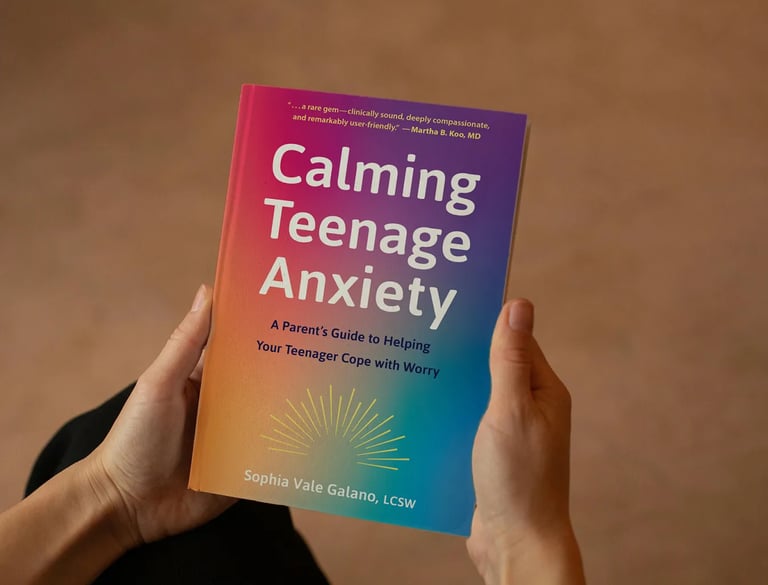
In Episode 29 of Nimble Youth, host Matt Butterman sits down with Sophia Vale Galano, LCSW—therapist, educator, speaker, and author of Calming Teenage Anxiety. Sophia’s clinical career has spanned public high schools, inpatient psychiatric units, residential programs, and private practice. She brings a rare combination of clinical expertise, real-world experience, and practical clarity to one of the most urgent challenges parents face today: teen anxiety.
M. Butterman
12/3/20253 min read
Nimble Youth – Episode 29 Show Notes
“Calming Teenage Anxiety: Practical Steps Parents Can Use Today”
Guest: Sophia Vale Galano, LCSW, author of Calming Teenage Anxiety
Episode Overview
In Episode 29 of Nimble Youth, host Matt Butterman sits down with Sophia Vale Galano, LCSW—therapist, educator, speaker, and author of Calming Teenage Anxiety. Sophia’s clinical career has spanned public high schools, inpatient psychiatric units, residential programs, and private practice. She brings a rare combination of clinical expertise, real-world experience, and practical clarity to one of the most urgent challenges parents face today: teen anxiety.
In this episode, Sophia walks us through:
Why teen anxiety is rising
How parents often accidentally shut down communication
How to tell normal developmental stress from true clinical anxiety
When—and how—to seek outside help
What to do when teens refuse therapy
The single daily practice parents can start tonight
Her holistic approach: movement, creativity, nature, and environment
Why listening trumps solutions, and curiosity trumps control
This is one of the most actionable episodes we’ve aired—packed with specific scripts, strategies and reminders designed to help parents move from panic to partnership.
About Our Guest: Sophia Vale Galano, LCSW
Sophia Vale Galano is a licensed clinical social worker and the author of Calming Teenage Anxiety: A Parent’s Guide to Helping Your Teen Cope With Worry. Born in Los Angeles and raised in London, she holds a Master’s in Social Work from NYU.
Her background spans:
Counseling teens in public and independent schools
Providing group therapy and case management in psychiatric settings
Serving as a primary therapist for young adult males in long-term substance use treatment
Supervising social work associates
Practicing master-level Reiki
Working as a yoga instructor
Integrating art, movement, and nontraditional therapeutic modalities
She also consults for Hollywood Health & Society and volunteers with animal rescue organizations.
Key Themes & Insights
1. Why Teen Anxiety Is Rising
Sophia identifies two overlapping drivers:
Classic developmental factors:
Puberty
Hormonal shifts
Cognitive changes
Identity formation
Modern amplifiers:
Social media
Technology and screen saturation
Reduced in-person connection
Cultural pressures around achievement
The result: more anxiety, earlier in life, and often harder for parents to interpret.
2. The Trust Break: Why Parents’ “Solutions” Shut Teens Down
Parents often jump immediately to:
“Have you tried meditating?”
“Go outside.”
“You’ll be fine.”
…all well-intended but often perceived by teens as invalidation.
What teens actually need first:
To feel heard, seen, and understood.
Not fixed.
3. Why Setting Matters: Conversations Work Better Without Eye Contact
Sophia encourages parents and clinicians to switch the setting:
Talk in the car
Go for a walk
Sit side-by-side instead of face-to-face
Do something together (cooking, errands)
Teens often open up when the pressure to “perform” disappears.
4. Is It Real Anxiety or Just Teenage Stress?
Sophia recommends observing two dimensions:
Frequency
How often is the anxiety occurring? Once a year? Weekly? Daily?
Severity
Does the teen…
push through the discomfort?
have panic attacks?
avoid school?
stop socializing?
withdraw from activities they once enjoyed?
The combination of frequency + severity helps determine when outside support is needed.
5. When Parents Should Seek Outside Help
Consider professional support when:
The teen’s functioning is significantly impacted
Anxiety leads to avoidance
Emotional regulation is deteriorating
Struggles persist despite supportive conversations
The teen asks for help
Sophia adds: any time a teen expresses willingness to talk to someone, seize the moment.
6. Highly Sensitive Kids: What Parents Should Know
Being sensitive does not mean a teen is destined for anxiety.
Key protective factors include:
Coping skills
Emotional literacy
Supportive relationships
Regulation strategies
Healthy modeling from adults
Sophia encourages parents to meet sensitivity with attunement, not fear.
7. The Home Environment and Anxiety: Why Parents Must Do Their Own Work
Sometimes a teen’s anxiety is shaped by the overall emotional tone of the household.
Parents can help by:
Managing their own stress
Seeking therapy or support
Modeling boundaries
Practicing self-care
Normalizing help-seeking
Teenagers learn more from what they see than what they’re told.
8. Three Repeatable Moves for Parents
Sophia offers three concrete steps parents can start today:
1. Respond with curiosity, not solutions
Use open-ended questions:
“Tell me more about that.”
“What was that like for you?”
“How did you get through it?”
2. Keep the door open
Even a 30-second conversation is progress.
3. Collaborate instead of rescuing
Work with the teen, not for the teen.
9. What If Your Teen Refuses Therapy?
Sophia cautions against forcing therapy unless safety requires it.
Instead:
Ensure the parent has their own support
Avoid enabling patterns (e.g., rescuing from academic consequences)
Offer choices: therapist style, format, specialties
Revisit conversations over time
Normalize therapy as one option—not the only option
Support must feel collaborative, not imposed.
10. The Lightning Round: Quick Takeaways
Are phones the main driver of anxiety?
No — it’s multifactorial.
Is labeling anxiety helpful?
It depends — labeling can empower or enable.
Do school accommodations risk over-accommodating?
Sometimes.
Can sleep/exercise reduce anxiety in two weeks?
Often yes, but it depends.
11. What Parents Can Try Tonight
Sophia recommends starting with:
The “Open Dialogue” chapter from her book — a guide to asking questions that create trust, connection, and emotional safety.
It’s the foundation for every other technique.
Resources Mentioned
Calming Teenage Anxiety by Sophia Vale Galano
Available via Amazon, Penguin Random House, Barnes & Noble, and independent bookstores.
Sophia’s website: sophiagalano.com
Closing
If this conversation resonated with you or someone you love, please:Subscribe to the Nimble Youth Podcast
Rate and review on Apple Podcasts
Share the episode with parents, educators, and caregivers who may benefit
Your support helps other families discover our work.
© 2025. All rights reserved.