Episode 28: Autism, Then and Now: Patrick’s Story and the Power of Community
In Episode 28 of Nimble Youth, we launch a new series exploring the lives of people who grew up with mental health or developmental differences — and how family, community, and changing knowledge shaped their journeys. We begin with autism, seen through the life of Patrick, Dr. Gretchen Hoyle’s cousin, who was born in 1972, long before “autism spectrum disorder” entered everyday language.
M. Butterman
11/26/20254 min read

Episode 28: Autism, Then and Now: Patrick’s Story and the Power of Community
Host: Matt Butterman
Guest: Dr. Gretchen Hoyle, MD — Pediatrician with 25 years of clinical practice
Series: Growing Up with Mental Health Conditions
🎧 Episode Overview
In Episode 28 of Nimble Youth, we launch a new series exploring the lives of people who grew up with mental health or developmental differences — and how family, community, and changing knowledge shaped their journeys.
We begin with autism, seen through the life of Patrick, Dr. Gretchen Hoyle’s cousin, who was born in 1972, long before “autism spectrum disorder” entered everyday language.
Patrick’s story unfolds in a time when:
Autism was rarely diagnosed
There were no IEPs, formal supports, or online communities
Kids who struggled socially were often labeled “odd,” “quirky,” or “in their own world”
Through this deeply personal narrative, Matt and Dr. Hoyle explore:
What autism looked like in the 1970s and ’80s
How family love created an early form of “community” before diagnostic language existed
How much more we understand now — and what hasn’t changed
🧩 Patrick’s Story: Autism Before We Had the Words
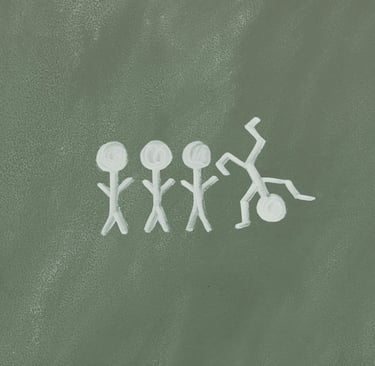
Dr. Hoyle describes growing up in a close-knit family of nine cousins, all within a few years of each other. Patrick, two years younger than her, quickly stood out as:
Exceptionally bright
Carried an almanac everywhere
Memorized capitals, populations, imports, weather patterns of countries few adults knew
Socially and physically different
Struggled with coordination in group games
Needed accommodations for things like Easter egg hunts (the “Patrick egg” hidden in plain sight)
Took language literally, missed inside jokes and social nuance
Even without a label, his cousins created a kind of protective community around him — choosing teams thoughtfully, saving the visible egg, involving him in play.
Years later, as Dr. Hoyle went through psychology, medical school, and pediatrics, she recognized what hadn’t been named at the time:
Patrick was on the autism spectrum.
🔍 Autism vs. “Just Neurodivergent”: What We Look For
Matt asks: What distinguishes autism from someone who’s just quirky or neurodivergent?
Dr. Hoyle highlights key features often present in autism:
Communication differences
Literal interpretation of language
Difficulty with nuance, jokes, or implied meaning
Social interaction challenges
Trouble reading others’ moods or facial expressions
Difficulty initiating and sustaining conversations with unfamiliar people
Safer and more regulated with “their people” (like cousins or known peers)
Narrow or intense interests
Deep, specialized focus (e.g., the almanac, birding later in life)
Topics not typically shared by age peers
She notes that:
What used to be called Asperger’s syndrome would likely have fit Patrick
Today, this is folded into Autism Spectrum Disorder (ASD) with varying levels of support needs
We now know much more about sensory sensitivities, stress processing, and strengths in autistic individuals than we did in the 1970s
🎓 Patrick’s Adulthood: Strengths, Challenges, and Community
Patrick:
Did well academically
Attended college in a community for students with similar challenges
Completed a Master’s in Library Science (very on-brand for his love of information and systems)
But adult life brought:
Strain in employment
Difficulties with friendships and relationships
Increasing challenges with day-to-day interaction
He eventually moved back in with his mother and stepfather after a hard period, especially around the post-pandemic years.
In 2023, after a family reunion and a special celebration of their ancestral family home in Old Salem (Winston-Salem), Patrick was killed in a car crash following an argument during a drive back from the event.
His death remains a profound grief and a powerful touchstone in Dr. Hoyle’s work.
💡 How Patrick’s Legacy Shapes Clinical Work Today
In clinic, Dr. Hoyle says Patrick is “with her” every day when she meets:
A bright child who is socially isolated
A teen who feels different but can’t say why
A parent who quietly says, “I don’t know how to help my child make friends.”
She sees:
The craving for community
The tension between strengths and vulnerabilities
The risk of anxiety, depression, and loneliness layered on top of autistic traits
She also underscores the hopeful piece:
We now know so much more about:
Teaching social communication skills
Supporting executive functioning
Helping neurodivergent kids thrive in school, work, and relationships
But she also warns that:
Kids today have fewer in-person interactions
More time on screens means less practice reading faces and body language
This is especially concerning for neurodivergent kids, who need live practice to build those social pathways
👨👩👧 Six Takeaways for Parents (Patrick’s Legacy in Practice)
Matt and Dr. Hoyle close with six key reminders for parents who see parts of Patrick’s story in their child:
Explore differences with curiosity, not fear.
If your child seems “different” socially, talk to your pediatrician. Early assessment and support can make a big difference.
Autism is not a tragedy — isolation can be.
Community, acceptance, and connection are deeply protective. Being alone with difference is what hurts most.
Be open to the community your child needs, not just the one you imagined.
Your child’s “people” may not look like what you pictured — and that’s okay.
Recognize and celebrate strengths. Neurodivergent kids often see the world differently, and that’s where innovation, creativity, and new ideas come from. Remember vulnerability alongside strengths.
Autistic and neurodivergent youth are often more vulnerable to anxiety, depression, and loneliness—not because of who they are, but because the world isn’t built for how their brains work.
You don’t have to figure this out alone.
Your pediatrician can help coordinate evaluations, therapies, school supports, and mental health care.
Above all: Celebrate your child. Difference is not deficiency. Connection is everything.
🗣️ Final Message
Matt closes with a reminder that conversations like this matter:
If today’s episode resonated with you, reach out to your pediatrician or mental health provider with any concerns about your child’s development or social functioning. These conversations are worth having.
© 2025. All rights reserved.